Premium accessories for iPhone 18. Shop now


Power Banks & Portable Chargers
Belkin power banks from 2.5K to 25K mAh. USB-C cable charging, Qi2 magnetic wireless for iPhone, Galaxy, and Pixel, plus 140W laptop options. Stay charged, stay connected, anytime, anywhere. 24/7 customer support.
- Featured
- Newest
- Best Seller
- Top Rated
- Price: Low to High
- Price: High to Low
https://www.belkin.com/products/portable-chargers-power-banks/?start=0&sz=12
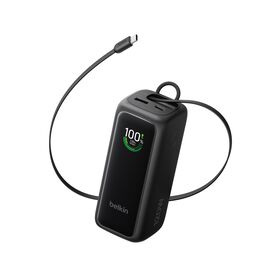


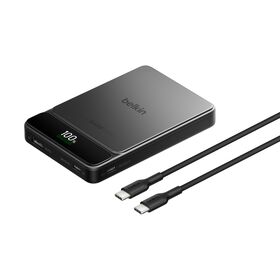

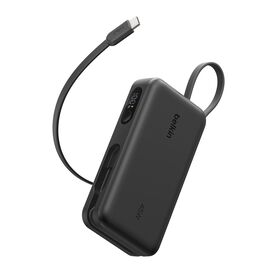


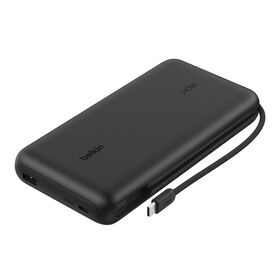


New
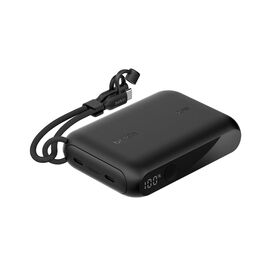


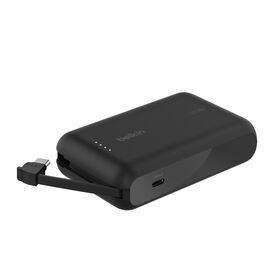
Which Power Bank Is Right for You?
USB-C, wireless, or laptop? Start here.
| If you want… | Capacity Range | Charging | Best For | Browse |
|---|---|---|---|---|
| Fast cable charging | 5,000 mAh - 25,000 mAh (18.5 Wh - 92.5 Wh) | USB-C / USB Power Delivery | iPhone 17, Galaxy S25/S26, Pixel 10, iPad, Switch 2 | USB-C Power Banks |
| Cable-free, magnetic | 2,500 mAh - 10,000 mAh (9.3 Wh - 37 Wh) | Qi2 / MagSafe magnetic, up to 15W | iPhone 12+, Galaxy S25/S26, Pixel 10 | Wireless Power Banks |
| Power for a laptop | 20,000 mAh - 25,000 mAh (74 Wh - 92.5 Wh) | USB-C PD up to 140W | MacBook Air, MacBook Pro, ultrabook + phone | Laptop Power Bank 25K |
| One-cable simplicity | 10,000 mAh / 37 Wh | USB-C with integrated cables | Travelers who don't want to pack extra cables | 10K w/ Integrated Cables |
| Wall charger + battery in one | 5,000 mAh / 18.5 Wh | 25W PD wall plug + portable battery | Daily commute and short trips | Hybrid Wall Charger + Power Bank |
Portable Chargers and Power Banks FAQ
A power bank is a portable battery that stores electrical energy so you can charge your phone, tablet, earbuds, or laptop when you are away from a wall outlet. Once you charge the power bank from a USB wall charger, it holds that energy until you connect a device with a USB cable or, on wireless models, place a compatible phone on its charging surface. Capacity is measured in milliamp-hours (mAh); higher capacity means more recharges before the power bank itself needs a top-up.
It depends on what you are charging and how often:
- 2,500 mAh to 5,000 mAh (9.3 Wh to 18.5 Wh): a top-up for a phone or earbuds; great for keychain or pocket use.
- 10,000 mAh / 37 Wh: roughly two full phone charges, or one phone plus a tablet recharge. The most popular size for daily carry.
- 20,000 mAh / 74 Wh: two to three phone charges plus a tablet, or one partial laptop top-up.
- 25,000 mAh / 92.5 Wh: a laptop power bank that can charge a USB-C MacBook or Windows ultrabook plus a phone, and still stay within TSA carry-on limits.
Yes, with rules. The TSA and FAA require lithium-ion power banks to fly in carry-on baggage only, never in checked luggage, and capacity must be 100 watt-hours (Wh) or less without airline approval. Most consumer power banks fall well under that limit. Belkin's largest model, the Laptop Power Bank 25K (25,000 mAh / 92.5 Wh), is within TSA limits. Some airlines in 2025 added rules requiring power banks to stay accessible under the seat and not be used to charge devices during flight; always check your carrier's policy before you travel. See our TSA-approved power bank travel guide for the current rules.
Multiply mAh by the battery's voltage (3.7V for most lithium cells), then divide by 1,000. For a 25,000 mAh power bank: 25,000 x 3.7 / 1,000 = 92.5 Wh. Common Belkin examples: 5,000 mAh = 18.5 Wh, 10,000 mAh = 37 Wh, 20,000 mAh = 74 Wh, 25,000 mAh = 92.5 Wh. The Wh figure is what airlines care about (the TSA limit is 100 Wh per power bank without prior approval). Belkin prints both numbers on the label so you can confirm before you fly.
It depends on capacity and the device you are charging. Roughly: a 5,000 mAh (18.5 Wh) power bank gives a current iPhone or Galaxy about one full charge; a 10,000 mAh (37 Wh) model gives roughly two charges; a 20,000 mAh (74 Wh) model can recharge a phone three to four times or a tablet once. Battery cells generally hold up well for 500+ full charge cycles before capacity starts to drop.
A USB-C power bank charges over a cable, supports USB Power Delivery (PD) for fast top-ups, and works with anything that has a USB-C port: phones, tablets, earbuds, laptops, and the Nintendo Switch 2. A magnetic wireless power bank snaps to the back of a Qi2 or MagSafe-compatible phone for cable-free charging on the go. Many shoppers carry one of each: cable for fastest charging, magnetic for convenience.
Slow charging usually comes down to one of three things: the power bank's output wattage is lower than your phone supports, the USB cable is rated below the wattage you need (a basic charge-only cable can cap at 15W), or the phone is hot and is throttling. Check the wattage printed on both the power bank and the cable. For more, see our blog on why your phone is charging slowly.
Connect the power bank's input port (USB-C on most current Belkin models) to a USB wall charger using the cable that came in the box, or any USB-C cable rated for the input wattage shown on the label. Most 10K and 20K Belkin power banks support PD input in the 18-30W range and recharge fully in 2-4 hours. Higher-capacity laptop power banks accept up to 60W in for faster top-ups. LEDs or the on-device display will show the battery level and turn off when the unit is full.
Power Bank Guides
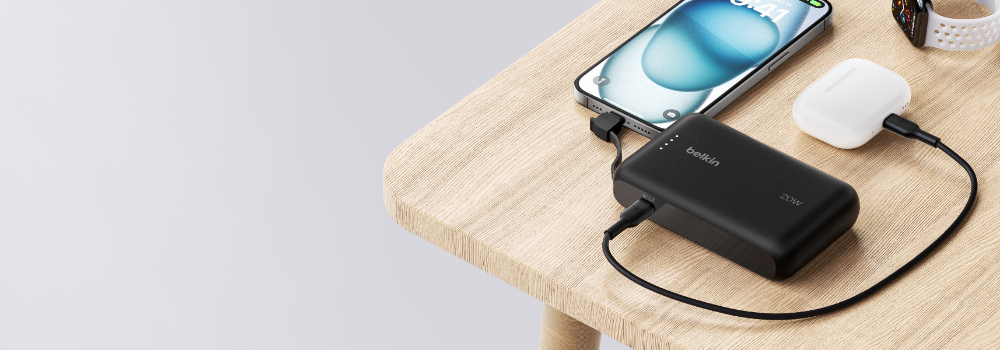
TSA regulations, the right capacity for your devices, and travel-friendly fast-charging options to stay powered on the go.
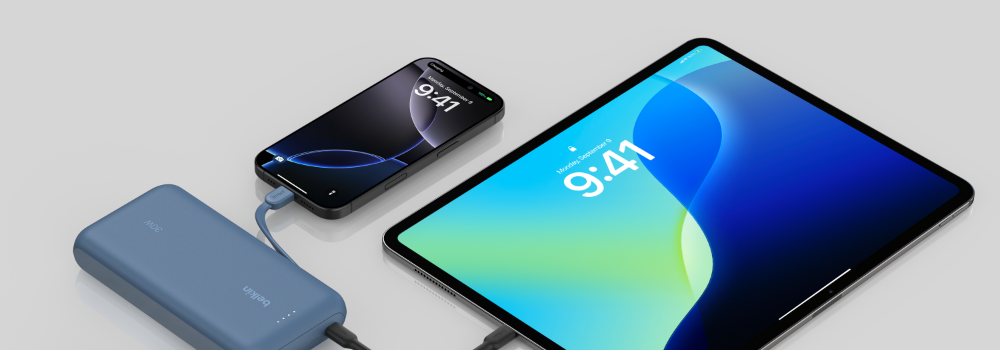
How Belkin's safety-first engineering and certifications protect you from overheating, recalls, and travel risks.
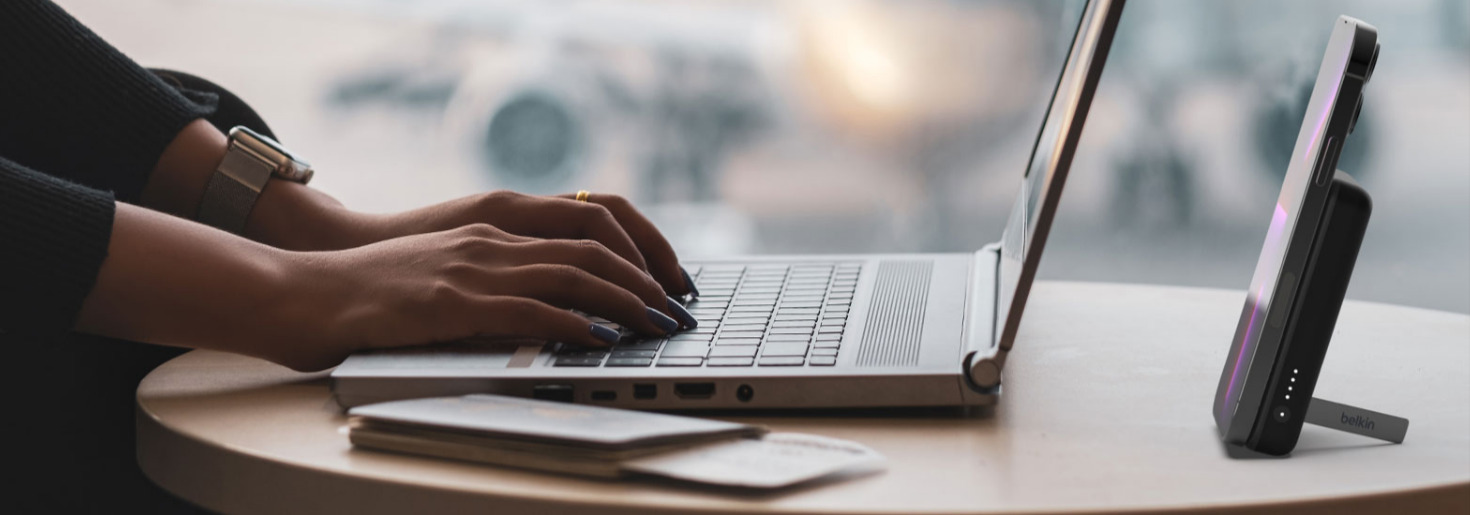
How magnetic power banks work, the benefits and tradeoffs of MagSafe and Qi2 designs, and how to pick the right one.
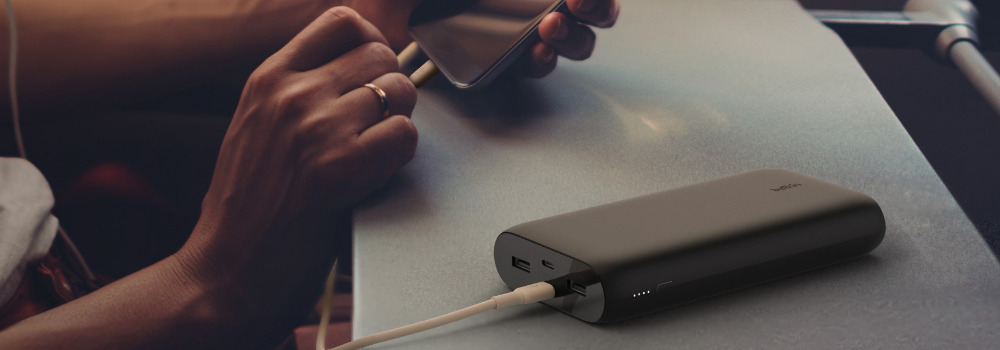
Learn the key differences between power banks and wireless chargers, from portability and charging speed to compatibility, so you can pick the right one for your lifestyle.
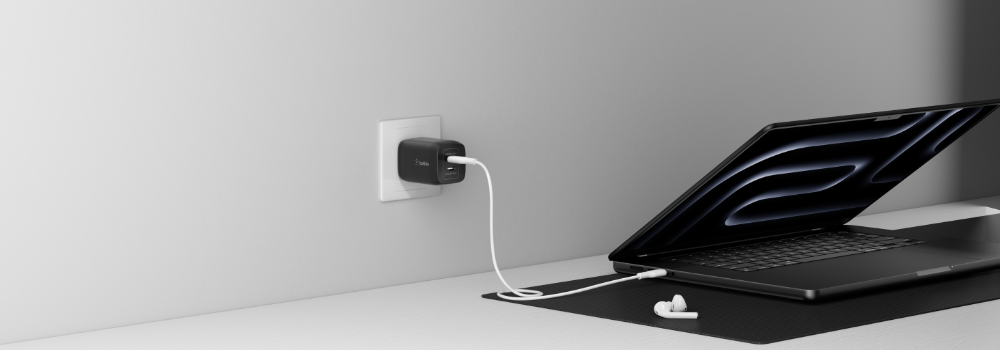
7 common reasons for slow charging, from weak cables to bad chargers, and how to fix each one fast.

Expert tips on charging, settings, and power management to extend iPhone 16 battery life and performance.

Keep your laptop running longer with easy power-saving tweaks, smarter charging habits, and expert battery-health tips, all in one guide.
6 of 7