Premium accessories for iPhone 18. Shop now


Wireless Chargers, Charging Pads & Stations
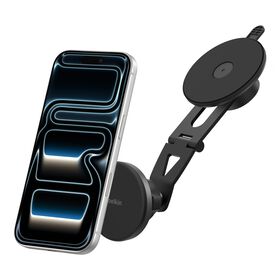
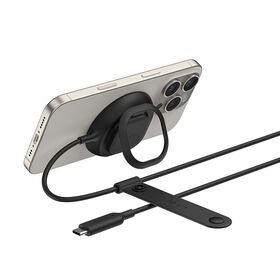
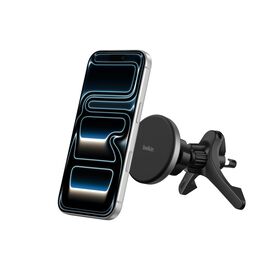
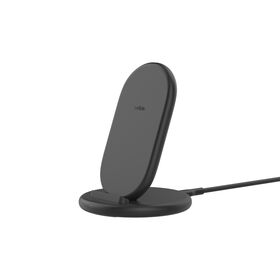
Discover Qi2 and Qi2 25W magnetic wireless chargers, MagSafe chargers, charging pads, stands, 3-in-1 stations, and wireless car chargers for iPhone 17, Galaxy S26, and Pixel 10. iPhone 16 and later charge at up to 25W on a Qi2 25W certified charger. Find options for home, office, and travel. 24/7 customer support.


- Featured
- Newest
- Best Seller
- Top Rated
- Price: Low to High
- Price: High to Low
https://www.belkin.com/products/wireless-chargers/?start=0&sz=12
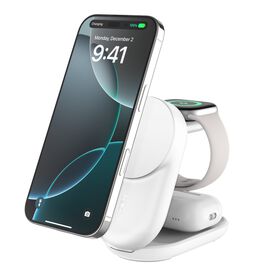


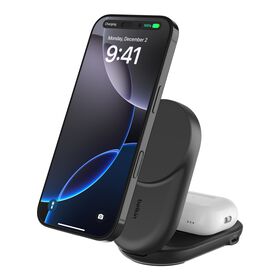


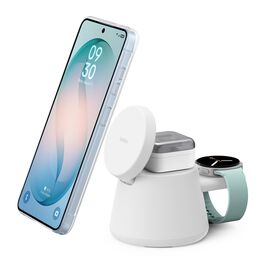

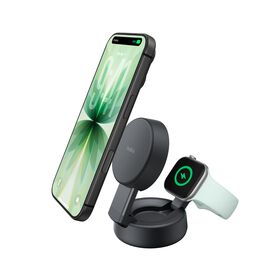



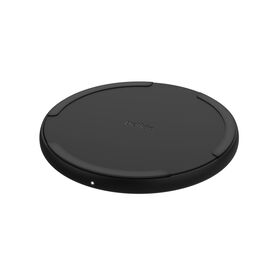
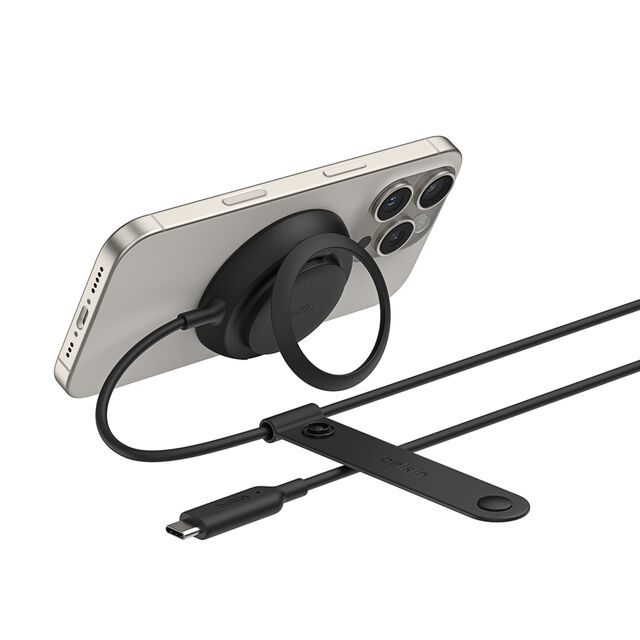
ChillBoost™ Cooling on Qi2 25W
Wireless charging at 25W generates more heat than older 5W or 15W standards. Heat can trigger thermal throttling on the phone, which slows charging and can affect battery life over time. ChillBoost™ Cooling is Belkin's passive cooling technology that reduces heat†† and protects battery during charging. It is available now on the Magnetic Charger with Qi2 25W, with more ChillBoost models rolling out through 2026.
†† Charging technology designed for enhanced heat dissipation. Actual temperatures will vary based on device, usage and environment.
Wireless Charging Standards Compared
Wireless chargers split into four main standards: Qi, MagSafe, Qi2, and Qi2 25W. The standard sets the maximum charging speed, the alignment method, and which phones it works with. Use this table to match the right wireless charger to your device.
| Standard | Max Speed | Alignment | Best For |
|---|---|---|---|
| Qi | 5W to 7.5W | Manual placement on pad | Older phones (iPhone 8–11, pre-2020 Android) |
| MagSafe | Up to 15W | Magnetic snap-on (Apple-certified) | iPhone 12 through iPhone 15 series |
| Qi2 | Up to 15W | Magnetic snap-on (WPC-certified) | iPhone 12+, Galaxy S25/S26, Pixel 10, OnePlus 13 |
| Qi2 25W | Up to 25W | Magnetic snap-on (WPC-certified) | iPhone 16 and later, Galaxy S26 Ultra, Pixel 10 Pro XL |
Shop wireless chargers by iPhone 17 model
Learn More About Wireless Phone Chargers
Wireless Charger FAQ
Wireless phone chargers is a way to charge your phone without needing to plug it in with a cable. You place your device on a charging pad or stand, and it will start charging automatically using an electromagnetic field. A chip controls the charging process to ensure it's safe and doesn't damage your device. Learn more about how it works here.
Neither magnetic charging nor wireless chargers are particularly bad for batteries. A battery slowly wears as it is charged or discharged over time. Leaving devices always charging can be harmful to their batteries. It's recommended to unplug the device once it is charged. Learn more about safety here.
Apple iPhone: every iPhone since iPhone 8 (2017), including iPhone Air, iPhone 17, 17 Pro, and 17 Pro Max. iPhone 12 and later add MagSafe magnetic alignment. iPhone 16 and later support Qi2 25W speeds on a Qi2 25W certified charger.
Samsung Galaxy: every Galaxy S series flagship from S6 onward (S6 through S26), every Galaxy Note from Note 5 on, and the Galaxy Z Fold and Z Flip foldables. The S25 and S26 series support native Qi2 charging. The S26 Ultra reaches 25W with a Qi2 25W charger (S26+ at 20W, S26 at 15W).
Google Pixel: Pixel 3 through Pixel 10 series, including Pro and Pro XL variants. Pixel 10, 10 Pro, and 10 Pro Fold add built-in Qi2 magnets. Pixel 10 Pro XL reaches 25W on a Qi2 25W charger.
Other Android: OnePlus 13 and HMD Skyline support Qi2 at 15W. Most other Qi-enabled Androids work at 5-7.5W on a standard Qi pad.
To use a wireless charger pad, first plug it into a power source and place your compatible device on the pad, making sure it's centered and aligned with any guidelines provided. Wait for the charging process to start, which may be indicated by a light or other indicator. It's important to note that not all devices are compatible with all wireless chargers, so check your device's specifications to ensure compatibility with the charger and the charging standard.
Wireless charger pads use a technology called inductive charging to transfer energy wirelessly from the charger to the device being charged. This works through two coils, one in the charger and one in the device, that create an electromagnetic field. Most wireless chargers use Qi, MagSafe, Qi2, or the newer Qi2 25W standard. Compatibility, charging speeds and other features vary based on the wireless charging technology.
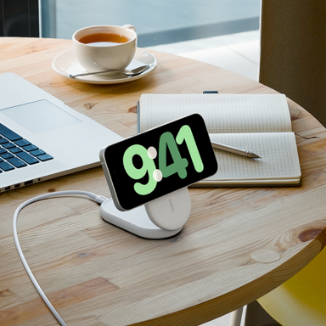
Wireless charging stands are similar to charging pads, but hold the device at an angle so it can be viewed while it charges. They work by using inductive charging, which transfers energy wirelessly from the charger to the device being charged. The charger contains a coil of wire that creates an electromagnetic field, and the device being charged contains a coil that picks up this field to charge the battery. Charging stands use the Qi, MagSafe, Qi2, or Qi2 25W standard. Qi2 and MagSafe stands add magnetic alignment for iPhone 12 and later; Qi2 25W stands reach 25W on iPhone 16 and later.
Yes, every iPhone from iPhone 8 (2017) onward supports wireless charging. The wattage and standard depend on the model:
- iPhone 8 through 11 series: Qi at up to 7.5W
- iPhone 12 through 15 series: MagSafe at up to 15W
- iPhone 16 and later: up to 25W on a Qi2 25W certified charger
- iPhone Air: up to 20W on a Qi2 25W certified charger
For maximum speed on iPhone 16 and later, use a Qi2 25W certified charger like Belkin's Magnetic Charger with Qi2 25W. For more, see our iPhone 17 fast charging guide.
Yes, most Samsung Galaxy phones since the Galaxy S6 (2015) support wireless charging. Coverage by series:
- Galaxy S series: S6 through S26 (S6, S7, S8, S9, S10, S20, S21, S22, S23, S24, S25, S26 and their Plus / Ultra variants)
- Galaxy Note series: Note 5, 8, 9, 10, 10+, 20 5G, 20 Ultra 5G
- Galaxy Z foldables: Z Fold, Z Fold2, Z Fold3, Z Fold4, Z Fold5, Z Fold6; Z Flip, Z Flip 5G, Z Flip3, Z Flip4, Z Flip5, Z Flip6
- Galaxy A series: select higher-end models (A80, A90, A91)
The Galaxy S25 and S26 series support the Qi2 magnetic profile natively. The S26 Ultra reaches 25W with a Qi2 25W certified charger; S26+ reaches 20W; S26 reaches 15W. Earlier Galaxy phones charge wirelessly but need a Qi2-ready case for snap-on magnetic alignment.
For more, see our Qi2 compatible devices guide.
Yes, most flagship Android phones from 2018 onward support wireless charging. Coverage by brand:
- Google Pixel: Pixel 3 through Pixel 10 series, including Pro and Pro XL variants. Pixel 10, 10 Pro, and 10 Pro Fold have built-in Qi2 magnets; Pixel 10 Pro XL reaches 25W on a Qi2 25W charger.
- Samsung Galaxy: S6 through S26 (S series), Note 5 through Note 20 Ultra, Z Fold and Z Flip foldables. The S25 and S26 series support Qi2; the S26 Ultra reaches 25W on a Qi2 25W charger.
- OnePlus: OnePlus 8 Pro and later, including OnePlus 13 which supports Qi2 at 15W.
- HMD: HMD Skyline supports Qi2 at 15W.
- Xiaomi: Mi 11, Mi 11 Ultra, 13 Pro, 14 Pro, and 15 series support wireless charging.
- Sony: Xperia 1 II through Xperia 1 VI support wireless charging.
For maximum wireless speed on Android, use a Qi2 25W certified charger with a Galaxy S26 Ultra or Pixel 10 Pro XL. For more, see our Qi2 compatible devices guide.
The main differences between iPhone and Samsung wireless chargers come down to the wireless standard, the maximum charging speed, and the magnetic alignment.
1. Wireless standard
- iPhone: Qi (iPhone 8-11), MagSafe (iPhone 12 and later), Qi2 25W (iPhone 16 and later, plus iPhone Air)
- Samsung: Qi (Galaxy S6 through S24), Qi2 (Galaxy S25 and S26 series), Qi2 25W (Galaxy S26 Ultra)
2. Maximum charging speed
- iPhone: up to 7.5W on Qi, 15W on MagSafe, 25W on Qi2 25W (iPhone 16 and later; iPhone Air caps at 20W)
- Samsung: up to 15W on most flagships, 25W on Galaxy S26 Ultra with a Qi2 25W certified charger (S26+ at 20W, S26 at 15W)
3. Magnetic alignment
- iPhone: built-in MagSafe magnets on iPhone 12 and later
- Samsung: built-in Qi2 magnets on Galaxy S25 and S26 series; earlier Galaxy phones need a Qi2-ready case for snap-on magnetic alignment
4. Cross-brand compatibility
- Most modern Qi2 and Qi2 25W chargers work for both iPhone and Samsung. A single Qi2 25W certified charger delivers the fastest available wireless speed on both an iPhone 16 and later and a Galaxy S26 Ultra. For more, see how MagSafe and Qi2 compare.
Wireless charging speed depends on the wireless standard, the charger, and the device. Here are the speed tiers from slowest to fastest:
- Qi (standard): up to 7.5W on iPhone, up to 10W on Samsung
- MagSafe: up to 15W on iPhone 12 and later
- Qi2: up to 15W on iPhone 12 and later, Galaxy S25/S26, Pixel 10, OnePlus 13, HMD Skyline
- Qi2 25W (also called Qi2.2): up to 25W on iPhone 16 and later, Galaxy S26 Ultra, Pixel 10 Pro XL; up to 20W on iPhone Air and Galaxy S26+
Speed summary by device:
- iPhone 8-11: up to 7.5W
- iPhone 12-15: up to 15W (MagSafe)
- iPhone 16 and later: up to 25W (Qi2 25W certified charger)
- iPhone Air: up to 20W (Qi2 25W certified charger)
- Galaxy S6 through S24: up to 15W
- Galaxy S26 Ultra: up to 25W (Qi2 25W certified charger)
- Pixel 10 Pro XL: up to 25W (Qi2 25W certified charger)
Actual charging speed depends on case thickness, alignment on the charger, and the charger's power output. For maximum speed on iPhone 16 and later, use a Qi2 25W certified charger like Belkin's Magnetic Charger with Qi2 25W. Learn more in our 25W wireless charging guide.
Qi2 25W (also called Qi2.2) is the latest revision of the open Qi2 wireless charging standard from the Wireless Power Consortium. It raises the maximum wireless charging speed to 25W on supported devices, while keeping the same magnetic alignment that Qi2 introduced.
Devices that charge at 25W on a Qi2 25W charger:
- Apple iPhone 16 and later (iPhone 16, 16 Plus, 16 Pro, 16 Pro Max, 17, 17 Pro, 17 Pro Max)
- Samsung Galaxy S26 Ultra
- Google Pixel 10 Pro XL
Devices that charge at 20W on a Qi2 25W charger:
- Apple iPhone Air
- Samsung Galaxy S26+
Belkin's Magnetic Charger with Qi2 25W is our first Qi2 25W charger; more ChillBoost models are rolling out through 2026.