Premium accessories for iPhone 18. Shop now

Charging
iPhone 17 Fast Charging: Up to 40W over USB-C
What the iPhone 17, 17 Pro and 17 Pro Max need to reach 40W, what the iPhone Air gets, and what the iPhone 18 changed.
The iPhone 17 family charges at up to 40W over USB-C with a 40W or higher adapter, and at 25W wireless on a Qi2 25W charger. That is 50% in about 20 minutes on a cable. Here is what to plug in, and what you can keep using.

About the brand

Belkin has made phone and laptop accessories since 1983: chargers, power banks, docks and screen protection. Every product is tested in our own labs and backed by a warranty and real support.
Shop BelkinGet 15% off
New gear, plain answers, and the occasional deal. Blog alerts, product announcements and exclusive offers by email and text.
Sign upEmails and texts. Unsubscribe anytime.
Key takeaways
- iPhone 17, 17 Pro and 17 Pro Max: up to 40W wired from a 40W or higher adapter, and 25W wireless on a Qi2 25W charger. That is the biggest charging upgrade in years.
- iPhone Air stays at 20W wired and 20W wireless, in line with recent iPhone generations.
- Any 60W (3A) USB-C to USB-C cable is enough. A 100W or 240W cable adds headroom for a laptop, not speed for the phone.
- Your 20W and 30W chargers still work. They stop short of the full 40W, and a 65W charger is safe because the phone draws only what it needs.
- The iPhone 18 Pro and Pro Max keep USB-C and 25W wireless. Apple's fastest wired figure for them needs a 60W adapter with Adjustable Voltage Supply.
The iPhone 17, 17 Pro and 17 Pro Max support up to 40W wired charging over USB-C, double the 20W that became standard with the iPhone 12. With the right charger and cable, these models reach a 50% charge in about 20 minutes, a meaningful jump over previous generations.
Important: iPhone Air continues to support up to 20W wired charging. A higher-wattage charger does not raise it.
How iPhone 17 Reaches 40W Speeds
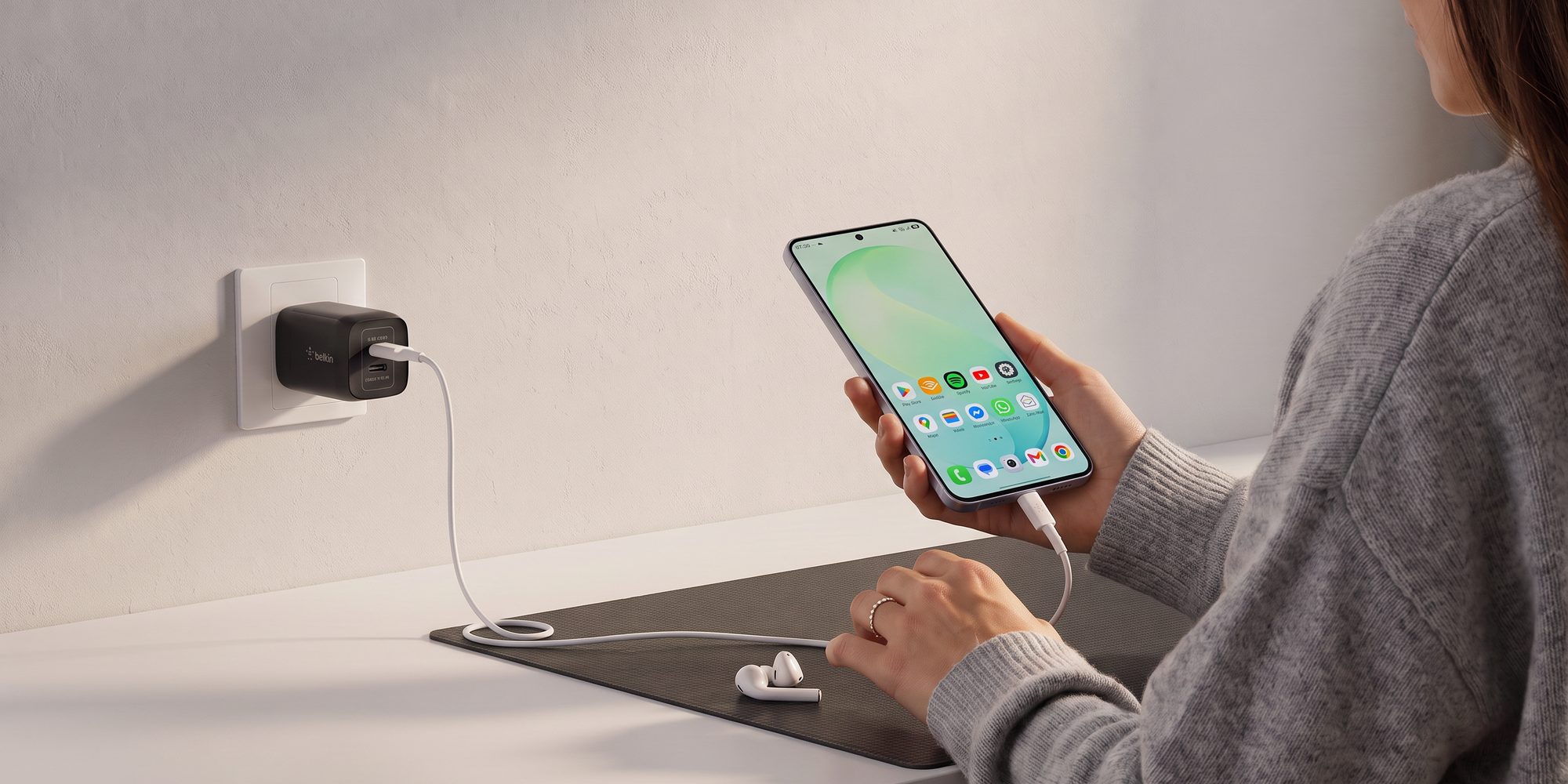
The iPhone 17 family uses USB-C Power Delivery (PD) to negotiate charging speeds. When you plug in, the charger lists what it can supply and the iPhone selects the highest safe level.
- iPhone 17, 17 Pro, 17 Pro Max: up to 40W
- iPhone Air: capped at 20W, even with a higher-wattage charger
Faster charging is reserved for the iPhone 17, 17 Pro and 17 Pro Max. iPhone Air continues with the familiar 20W speeds.
Charging speeds in real use. Apple's charging curve delivers higher speeds in the 1% to 50% range, then tapers off to protect the battery.
- iPhone 17, 17 Pro, 17 Pro Max: stable charging close to 40W sustained, making short top-ups significantly faster.
- iPhone Air: up to 20W wired, consistent with previous generations.
What that means day to day.
- iPhone 17 family: a 10 to 15 minute top-up gives a much bigger battery boost than older models.
- iPhone Air: still benefits from quick charging, capped at 20W.
- One-charger travel kit: a compact PD charger can fast-charge your iPhone 17 Pro and still power a laptop.
- Battery health: Apple's charging curve avoids the stress of extreme wattages while still being faster than older models.
Requirements for iPhone 17 Fast Charging
1. A USB-C Power Delivery charger rated 40W or higher.
- For iPhone 17, 17 Pro and 17 Pro Max: a 40W to 65W charger gives the phone room to negotiate its ideal profile.
- For iPhone Air: anything above 20W will not increase speed.
2. A USB-C to USB-C cable rated for 60W (3A) or higher.
- Any USB-C to USB-C cable rated for 60W (3A) is enough for every iPhone 17 model.
- 100W and 240W (5A) e-marked cables are not required for charging the phone, though they are useful if you also charge a laptop with the same cable.
- Look for USB-IF certified cables, which are tested for safety and performance. For a deeper dive, see our USB cables ultimate guide.
3. Smart charging habits.
- Plug directly into the wall.
- Remove thick cases during fast charging.
- Start your charge between 1% and 50% for the fastest boost.
Belkin's USB-C wall chargers from 45W up and its 60W, 100W and 240W USB-C cables meet all of the above.
iPhone 17 Wireless Charging
The iPhone 17 family also gets a wireless charging upgrade. Here is what each model supports:
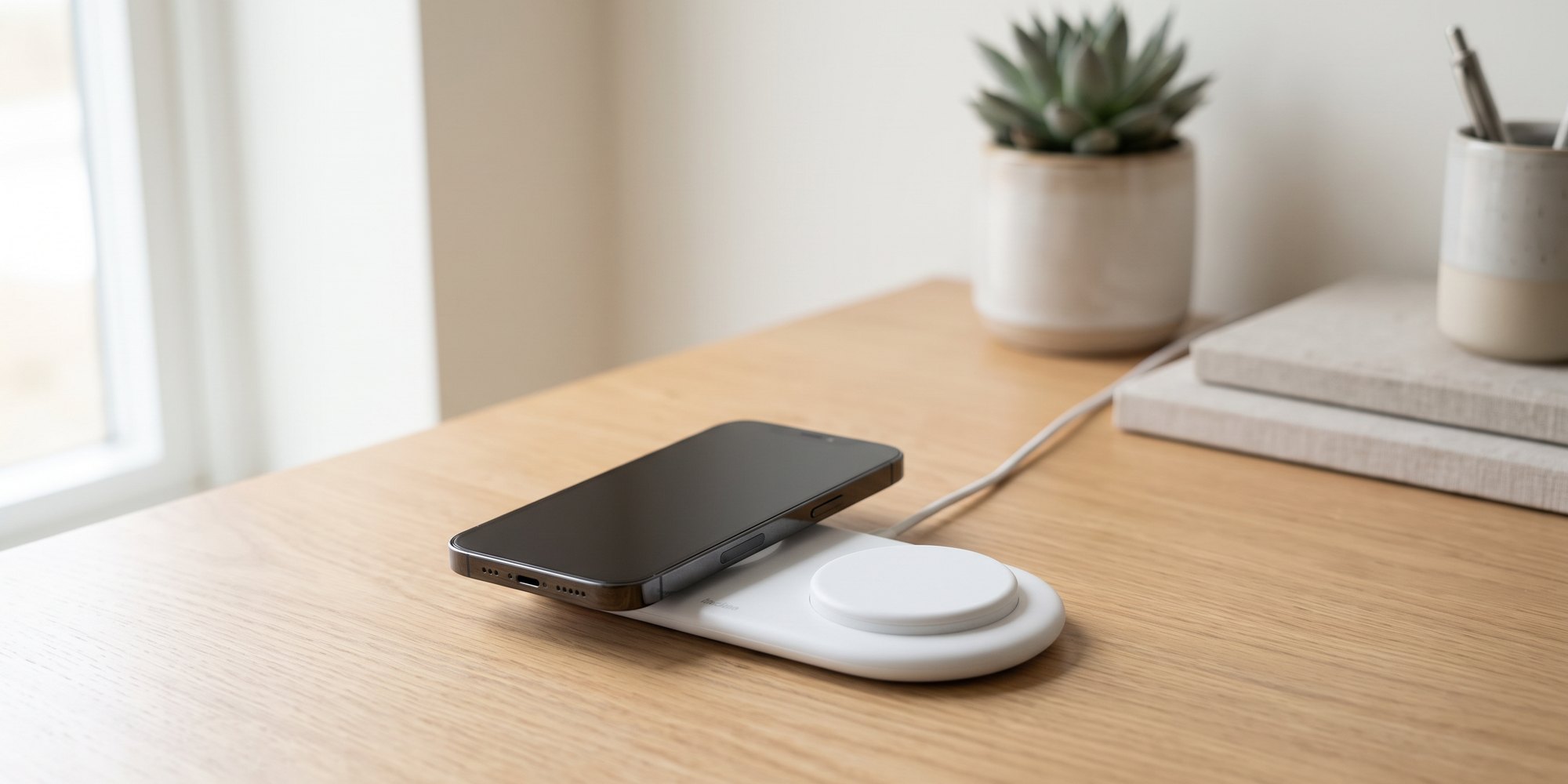
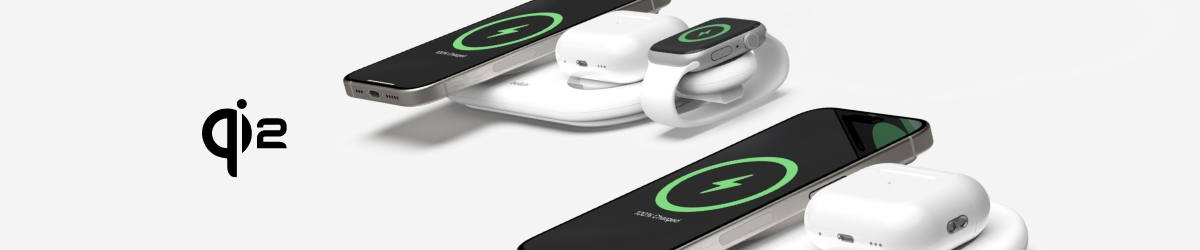
- iPhone 17, 17 Pro, 17 Pro Max: up to 25W wireless on a Qi2.2 (also called Qi2 25W) charger or magnetic power bank. This is the biggest wireless jump since MagSafe launched.
- iPhone Air: up to 20W on MagSafe and up to 20W on Qi2 wireless chargers.
To take advantage of 25W wireless on the iPhone 17, 17 Pro and 17 Pro Max, you need a Qi2.2-certified charger or magnetic power bank. Put a 30W or higher adapter behind it. Older MagSafe chargers still work, but they cap at 15W. Apple's own figure is 50% in 30 minutes on a MagSafe Charger paired with a 30W adapter. See our wireless power banks for Qi2 and MagSafe-compatible options.
MagSafe and Qi2 share the same magnet layout, so a Qi2 25W charger snaps onto an iPhone 17 the way a MagSafe charger does. Our MagSafe vs Qi2 explainer covers what differs.
Compatibility with Existing Chargers
- 20W chargers: work with every model. iPhone Air gets its full speed, and the iPhone 17 family charges slower than 40W.
- 30W chargers: work for iPhone 17, 17 Pro and 17 Pro Max but will not enable the full 40W ceiling.
- 65W and higher chargers: fully supported and safe. PD ensures the iPhone only draws what it needs.
The rule of thumb: the phone sets the ceiling, the charger has to clear it, and the cable has to carry it. A 45W charger and a 60W cable clear both for every iPhone 17 model.
iPhone Charging Evolution
Wired charging ceilings by generation. The iPhone 17 family is the first to pass 30W.
Swipe the table sideways to see every column.
| iPhone Model | Certified Max | Real-World Sustained |
|---|---|---|
| iPhone 12 - 14 | 20W | ~18-20W |
| iPhone 15 Pro Max | ~27W | ~25W |
| iPhone 16 Series | ~30W | ~30W |
| iPhone 17, 17 Pro, 17 Pro Max | 40W | Stable ~40W |
| iPhone Air | 20W | ~20W |
Certified Max is the peak wired figure for each generation. Real-World Sustained is what the phone holds through the fast part of the charge. Apple publishes adapter wattages and time to 50% rather than a peak draw, so the iPhone 15 and 16 figures are reported values.
What the iPhone 18 Changed
Apple introduced the iPhone 18 Pro, iPhone 18 Pro Max and the folding iPhone Duo on September 9, 2026. For charging, three things carry straight over from the iPhone 17: the USB-C port, the magnets and the 25W wireless ceiling on MagSafe and Qi2.
What moved is the wired figure. Apple rates the iPhone 18 Pro and Pro Max at 50% in around 15 minutes on a 60W-capable adapter or higher with Adjustable Voltage Supply, or AVS. The iPhone Duo reaches 50% in around 20 minutes on a 60W adapter or higher. On a MagSafe Charger behind a 35W or higher adapter, all three reach 50% in 30 minutes.
So a charger bought for an iPhone 17 still charges an iPhone 18 Pro, and a 40W or 45W charger is not slow on it. Only the 15-minute figure needs the bigger adapter, and that adapter has to support AVS. AVS is a Power Delivery feature that lets the phone request its voltage in fine steps. A 60W charger without AVS still fast charges, just not on Apple's quoted curve. Check the adapter's spec sheet for AVS if that figure matters to you.
Swipe the table sideways to see every column.
| Model | Wired (Apple's figure) | Wireless (MagSafe and Qi2) |
|---|---|---|
| iPhone 17, 17 Pro, 17 Pro Max | 50% in 20 minutes with a 40W adapter or higher | 25W |
| iPhone Air | 50% in 30 minutes with a 20W adapter or higher | 20W |
| iPhone 18 Pro, 18 Pro Max | 50% in around 15 minutes with a 60W-capable adapter or higher with AVS | 25W |
| iPhone Duo | 50% in around 20 minutes with a 60W-capable adapter or higher | 25W |
Apple's figures, from the specifications pages for each model, September 2026. Wireless figures are the MagSafe and Qi2 ceilings. Reaching 25W on a Qi2 25W charger needs a 30W or higher adapter behind it.
Reported battery capacities grew on the Pro Max and the Duo. That is the other reason a 60W adapter does more for an iPhone 18 owner this year than a new cable. Our iPhone 18 charger guide covers what carries over in more detail, and the iPhone 18 accessories page lists what fits.
Which Charger to Buy for the iPhone 17
Four picks that clear the iPhone 17's 40W ceiling, grouped by what you need them to do.
How we picked: each charger is rated 45W or higher, so it clears the 40W the iPhone 17 draws with room to spare. The cable is rated 240W, four times what the phone can take. Prices and ratings update from the store.
Best value for 40W
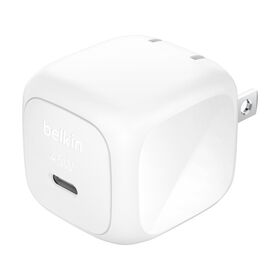
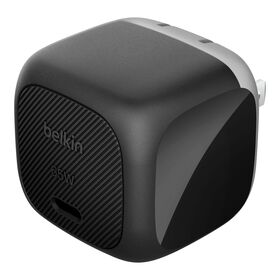
Compact USB-C Wall Charger 45W
- 45W
- One USB-C port
- Foldable prongs
- Clears the iPhone 17's 40W
- USB-C PD 3.1 certified
- Made with recycled plastic
Best for phone and laptop
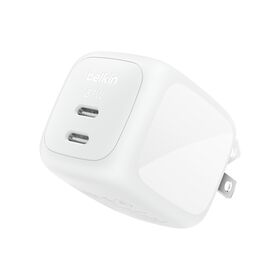
- 65W
- One USB-C port
- Black
- 40W for the phone, 65W for a laptop
- Fast charges a laptop, tablet or phone
- One charger to pack
Best for two devices
Dual USB-C GaN Wall Charger 67W
- 67W
- Two USB-C ports
- GaN
- Phone and a second device at once
- Foldable prongs
- Zero standby power
The cable
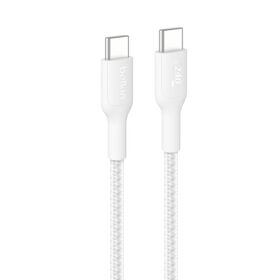
USB-C to USB-C Braided Cable 240W, 3.3ft/1m, White
- 240W
- 3.3 ft
- Braided
- Carries more than any iPhone draws
- Charges a laptop with the same cable
- USB-C to USB-C, both ends
If you already own a 30W charger, a 45W compact charger is the smallest upgrade that gets the iPhone 17 to its full speed. If you also carry a laptop, the 65W single or the 67W dual does both jobs from one plug.
Why trust Belkin
Belkin has built charging accessories since 1983 and is a certified Qi2 and MagSafe partner. Our chargers go through 25 or more quality tests and carry 10 or more global certifications before they ship, and every one is backed by a 2-year warranty.
iPhone 17 Charging: Your Questions Answered
Does iPhone 17 include a charger?
No. The box includes the phone and a USB-C to USB-C cable. You will need a separate USB-C PD charger.
Do I need a special 40W cable?
No, any 3A/60W USB-C to USB-C cable works for fast charging. 5A e-marked cables are optional and only needed if you also charge a laptop with the same cable.
Can I use my MacBook charger?
Yes. USB Power Delivery ensures the iPhone only draws what it needs, even from a 100W charger.
Is wireless charging catching up?
On the iPhone 17, 17 Pro and 17 Pro Max, yes. Qi2.2 at 25W is much closer to wired speeds. On iPhone Air, wireless tops out at 20W.
What watt charger do I need for the iPhone 17?
A USB-C Power Delivery charger rated 40W or higher for the iPhone 17, 17 Pro and 17 Pro Max. A 45W charger is the smallest that clears the ceiling, and a 65W GaN charger adds room for a laptop without pushing the phone any harder. The iPhone Air tops out at 20W on any charger.
Does the iPhone 17 Pro Max charge faster than the iPhone 17?
No. All three share the 40W wired and 25W wireless ceilings. The Pro Max has the larger battery, so it takes longer to fill from empty at the same speed. Everything Belkin makes for the three models is on the iPhone 17 charging page.
Will my iPhone 17 charger work with the iPhone 18 Pro?
Yes. The iPhone 18 Pro keeps USB-C, so a 40W or 45W charger charges it at close to the iPhone 17's speed. Apple's 15-minute figure for the 18 Pro assumes a 60W-capable adapter with Adjustable Voltage Supply, so only that headline number needs the bigger adapter.
Why does my iPhone 17 charge slowly on a 40W charger?
Check the cable first, since a cable rated below 60W caps the speed. Heat slows charging too, and the phone eases off after 50% to protect the battery. Our slow charging guide walks through the seven causes.
Shop Chargers and Cables for iPhone 17
The chargers and cables that get an iPhone 17 to 40W.
Wall charger
Compact USB-C Wall Charger 45W
$19.99Coming soon
Wall charger
Compact USB-C Charger 65W
$29.99Coming soon
Wall charger
Dual USB-C GaN Wall Charger 67W
$59.99Shop
Cable
USB-C to USB-C Braided Cable 240W, 3.3ft/1m, White
$14.99Coming soon
Cable
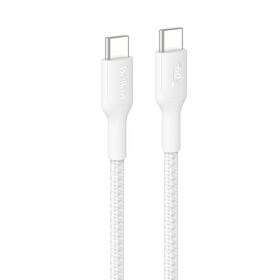
Braided USB-C to USB-C Cable 60W, 3.3ft/1m, White
$11.99Coming soon